- Home
- Nachrichten
- How much could your coin really be worth? It may not be obvious at first glance
How much could your coin really be worth? It may not be obvious at first glance
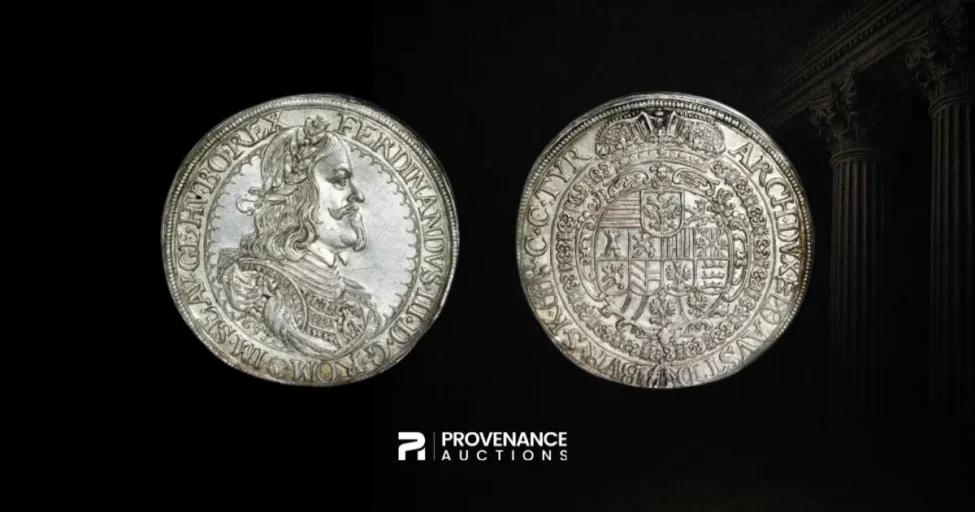
Perhaps your coin is not too “ordinary” — it may simply not have been seen by an expert eye or presented to the right collector audience yet.
Many people believe that only exceptionally rare, visibly valuable or historically significant pieces are worth consigning to auction. When it comes to a gold coin, a rare year, a coin linked to a well-known ruler or an item in exceptional condition, it is easy to imagine that serious interest could develop.
But what about the coins that are sitting in a drawer, an envelope, an old wallet or a box inherited from a family estate?
At first glance, they often seem like nothing more than “old money”. They are not necessarily made of gold, they may not appear especially rare, and the owner often does not know exactly which period they come from. Still, such a piece may deserve more attention than one might first think.
True value is not always immediately visible.
Why is it not enough to judge a coin by appearance alone?
The value of a coin is determined by several factors together. It is not only a question of whether it is old, rare or what metal it is made from. The year, mint mark, condition, historical background, collector demand and how well the piece fits current interest in the numismatic market can all be important.
There can be a significant difference between two coins that look very similar at first glance. A different date, a rarer variety, a small mint mark, better preservation or a more unusual issuing circumstance may all change how the coin is assessed.
This is why it can be misleading to make decisions based solely on internet search results, online marketplace prices or listings that appear similar. An expert does not only look at “what coin this is”, but also at the exact variety, the condition in which it has survived, and the market potential it may have.
Rarity matters, but it is not the only factor
In numismatics, rarity is naturally an important factor. A coin that is difficult to obtain and has survived in only a limited number of examples can attract serious interest.
But suitability for auction is not determined by rarity alone.
A more common type can also be sought after if it is in attractive condition, belongs to a collectible period, or is connected to a popular ruler, mint or historical era. In the same way, a smaller thematically assembled collection may be more valuable as a whole than one might think based on the individual pieces alone.
Many owners do not ask for an evaluation precisely because they feel: “this surely is not special enough”. Yet the real question is not whether it looks special at first glance, but whether it may hold value for the right collectors.
Condition can often be decisive
Condition plays a key role in how a coin is viewed on the market. Wear, scratches, damage, traces of cleaning or the preservation of the original surface can all influence buyer interest.
In fact, in many cases it is not best if a coin looks “shiny”. Improper cleaning can actually reduce its value, because it may remove the original patina, cause scratches or leave behind an unnatural surface.
For this reason, it is important not to clean, polish or rub a coin before having it evaluated. It is enough to take good-quality, sharp photographs of both sides, preferably in natural light, so that the inscriptions, date and small details are visible.
Why does the audience matter?
Selling a coin is not only about whether “there is a buyer for it”. It is just as important whether it reaches people who truly understand and are looking for that particular type.
This is precisely where an auction can be valuable: the item can be presented to a targeted collector audience. It may be seen by interested buyers who do not simply view it as an old object, but recognise its numismatic significance, its condition, a rarer variety or its relevance to their own collection.
A coin that may seem simple at first can be seen in a different light when it is presented with an accurate description, good photographs and in a trusted auction environment.
Good presentation builds trust
Many people think that a coin “sells itself”. In practice, however, the quality of presentation matters a great deal.
Detailed photographs, precise professional identification, information about condition and a transparent auction environment all help potential buyers make a more confident decision.
An uncertain, poorly photographed or incompletely described piece can easily be overlooked. The very same coin, when presented properly, may receive a completely different level of attention.
Free initial expert evaluation based on photos
If you have an old coin or collection at home, you do not need to know in advance exactly what you are holding. This is precisely why an initial expert evaluation can be useful.
At Provenance Auctions, we help assess from photographs whether your coin or collection may be suitable for auction sale. The initial evaluation can be requested simply, quickly and without obligation.
No seller’s commission.
No obligation.
Selected items may also be accepted for auction.
Find out what it could really be worth
An old coin is sometimes just a keepsake. At other times, it may be a collectible item. In some cases, it may even be suitable as an auction lot.
The difference is not always visible at first glance.
If you are unsure what value your coin, banknote or collection may represent, it is worth asking for an expert opinion. Perhaps the piece is not “ordinary” — it simply has not yet been examined by the right eye.
Send photos of your coins to Provenance Auctions and request a free initial expert evaluation.
Haben Sie eine Münze, Banknote oder Sammlung zu Hause?
Sie müssen den Wert nicht im Voraus kennen.
Artikel teilen
Neueste Nachrichten
Folgen Sie uns!
Haben Sie Fragen?
Wir helfen Ihnen gerne.
Wenn Sie eine Frage zu einer Auktion haben oder Unterstützung bei einer unserer Dienstleistungen benötigen, kontaktieren Sie uns bitte. Füllen Sie das Formular aus, und wir werden uns so schnell wie möglich bei Ihnen melden. Wir stehen Ihnen in jeder Phase des Bietprozesses sowie bei allen damit verbundenen Anliegen zur Verfügung.