Common mistake: storing coins in unsuitable conditions
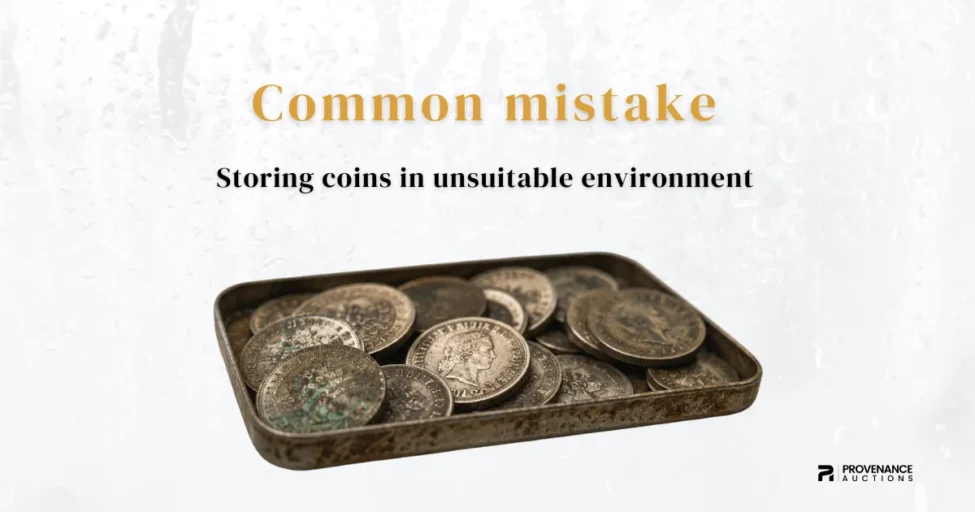
The value of an old coin is determined not only by its rarity, age or historical significance. Its condition is equally important to collectors and specialists, which means that the environment in which it has been kept over the years—or even decades—can make a considerable difference.
Damage caused by unsuitable storage often develops gradually and may remain unnoticed for a long time. By the time the coins are taken out for appraisal or sale, moisture, dust or inappropriate storage materials may already have left permanent marks on their surfaces.
Why is a coin’s condition so important?
Two coins of the same type and date can differ significantly in value depending on their condition. The preservation of the surface, the visibility of the original details, mint lustre and any signs of damage may all influence collector demand and market value.
A rare coin may still be valuable even if it is damaged, but deterioration caused by poor storage can reduce its appeal to potential buyers. Protecting a collection is therefore not merely an aesthetic concern—it is also an important part of preserving its value.
What damage can moisture and dust cause?
High humidity and damp conditions can encourage corrosion and lead to discolouration, spotting or other changes to the surface. In some cases, mould may also develop on storage materials, potentially affecting not only coins but also banknotes, documents and other items in the collection.
Dust can also cause problems, especially when coins are stacked together or stored in an open box. Fine particles on the surface may create small scratches when the coins are moved. Wiping or rubbing them can therefore cause more harm than expected.
Old plastic holders are not always safe
Many people assume that a coin is adequately protected if it is kept in a plastic sleeve, album or holder. However, not all older plastic materials were designed for long-term numismatic storage. Some may deteriorate over time, become discoloured or release substances that react with the surface of the coin.
Warning signs may include hardened or sticky plastic, an unusual smell, or discolouration around the coin. In such cases, it is best not to clean or remove the item without professional advice, as an unsuitable intervention may cause further damage.
How should an old collection be stored?
Coins should ideally be kept in a clean, dry environment with a stable temperature, away from direct sunlight, radiators, cellars and other damp areas. Holders and capsules specifically designed for numismatic storage can help protect the coins from environmental damage and prevent them from coming into contact with one another.
Old coins should not be cleaned or polished, and direct contact with their surfaces should be avoided whenever possible. Preserving the original surface is generally far more important than making a coin appear brighter through home cleaning.
Professional advice without an obligation to sell
A professional assessment does not mean that the collection has to be sold immediately. Expert advice can also be useful simply to identify what you have, understand the condition of the items and learn how to store them properly in the future.
The Provenance Auctions team can provide professional valuations and guidance on suitable storage. This can help identify which pieces require particular care and how the condition and value of the collection may be preserved for years to come.
Do you have a coin, banknote or collection at home?
You don’t need to know its value in advance.
Share article
Do you have questions?
We are here to help.
If you have a question regarding an auction or require assistance with any of our services, please contact us. Complete the form and we will respond as soon as possible. We are available to support you at any stage of the bidding process or with any related inquiry.