What happens to a coin before it is offered at auction?
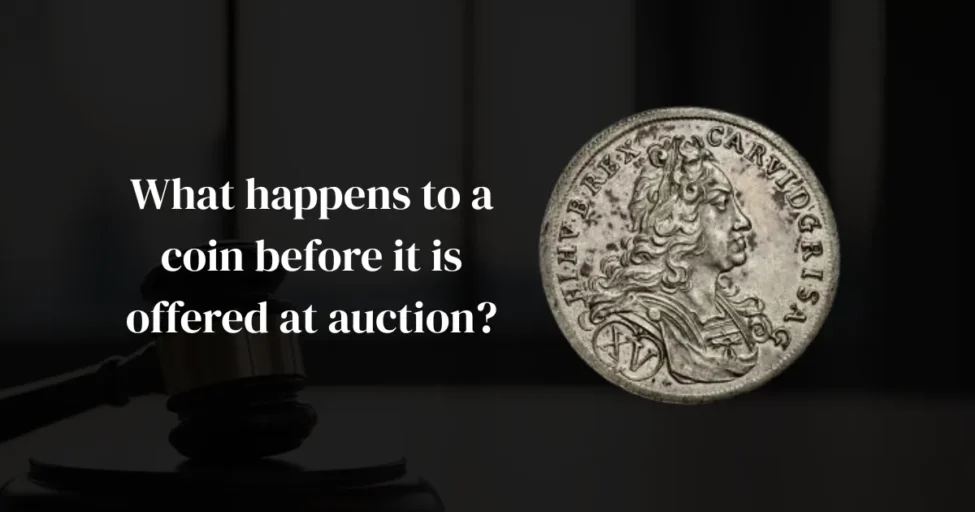
A coin’s story does not begin when the first bid is placed. Before it appears in an auction catalogue and is presented to collectors, it goes through a professional assessment and preparation process. This helps determine exactly what the coin is, why it may be significant, how it should be described, and whether auction is the right method of sale.
Expert assessment
Not every old coin is automatically suitable for auction. Age alone does not determine numismatic importance or market value. Specialists examine the coin, identify its type, date and mint, and assess its condition, rarity and significance to collectors. A rarer date, an unusual variety, exceptional preservation or a historically significant type can make one coin considerably more desirable than another that may look very similar.
This stage also helps determine whether the coin is suitable for sale at auction. The aim is to understand how it fits into the numismatic market and what may make it relevant to potential bidders.
Research and documentation
Once the coin has been assessed, the information needed for an accurate catalogue description is gathered. Research may include confirming the precise type and variety, mint, date, denomination and other characteristics that are important for identification, with particular attention paid to details that may influence collector interest.
The coin is then documented with a specialist description and professional photographs. This allows potential bidders to examine its key characteristics before the auction and helps ensure that the qualities of the piece are presented clearly and accurately.
Preparing the lot for auction
After the assessment and documentation are complete, the coin can be prepared as an auction lot. Its place within the auction offering is determined, the relevant terms of sale are established, and the lot is presented to prospective bidders through the auction catalogue and associated communication.
From that point onward, collector interest, demand for the particular type and competitive bidding influence the final result. By the time bidding begins, substantial professional work may already have gone into identifying, researching and presenting the coin.
Could your coin be suitable for auction?
A coin that appears ordinary may contain details that are not immediately obvious without specialist knowledge. Rarity, an unusual variety, exceptional condition or an interesting historical background can significantly affect how a piece should be evaluated.
If you have an old coin, banknote or collection and would like to know whether it could be suitable for auction, send photographs to the Provenance Auctions team and request a preliminary expert opinion.
Do you have a coin, banknote or collection at home?
You don’t need to know its value in advance.
Share article
Latest News
Follow us!

Do you have questions?
We are here to help.
If you have a question regarding an auction or require assistance with any of our services, please contact us. Complete the form and we will respond as soon as possible. We are available to support you at any stage of the bidding process or with any related inquiry.