What does starting price mean at auction?

The starting price is a common auction term. It is one of the most basic concepts, yet it is important to understand it clearly, as it is often confused with the final selling price.
What is a starting price?
The starting price is the amount from which bidding begins.
It is not the final price of the lot, but the starting point of the bidding process. From this amount, bidders begin to compete for the coin, banknote, or numismatic item, and if several bidders are interested, the price may rise during the auction.
For example, if a coin has a starting price of EUR 50, bidding begins from that amount. The final price may be only slightly higher, or it may increase significantly, depending on the level of interest in the lot.
How is it different from the hammer price?
The starting price is the opening point of the bidding.
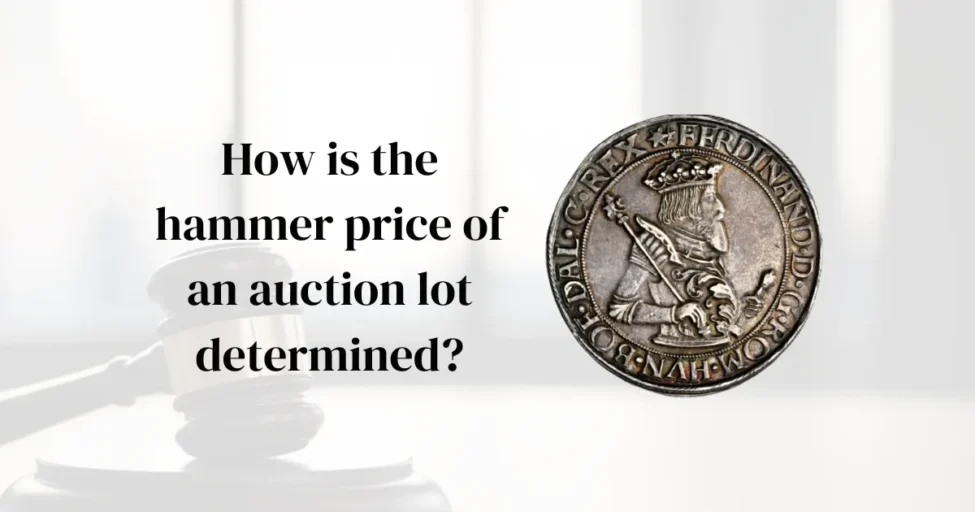
The hammer price is the amount at which the lot is finally sold.
This is why a lot should not be judged solely by its starting price. An attractive starting price can generate interest, encourage bidding, and the final price is ultimately determined by bidder activity.
Why is it important for buyers?
For buyers, the starting price offers useful guidance, but it should not be seen as the final cost. It is worth deciding in advance how far you are willing to go in the bidding, while also considering additional costs such as buyer’s premium or shipping.
Understanding the starting price helps buyers navigate auctions with more confidence and take part in bidding more consciously.
Do you have a coin, banknote or collection at home?
You don’t need to know its value in advance.
Share article
Do you have questions?
We are here to help.
If you have a question regarding an auction or require assistance with any of our services, please contact us. Complete the form and we will respond as soon as possible. We are available to support you at any stage of the bidding process or with any related inquiry.