What was the first coin that sparked your passion for collecting?
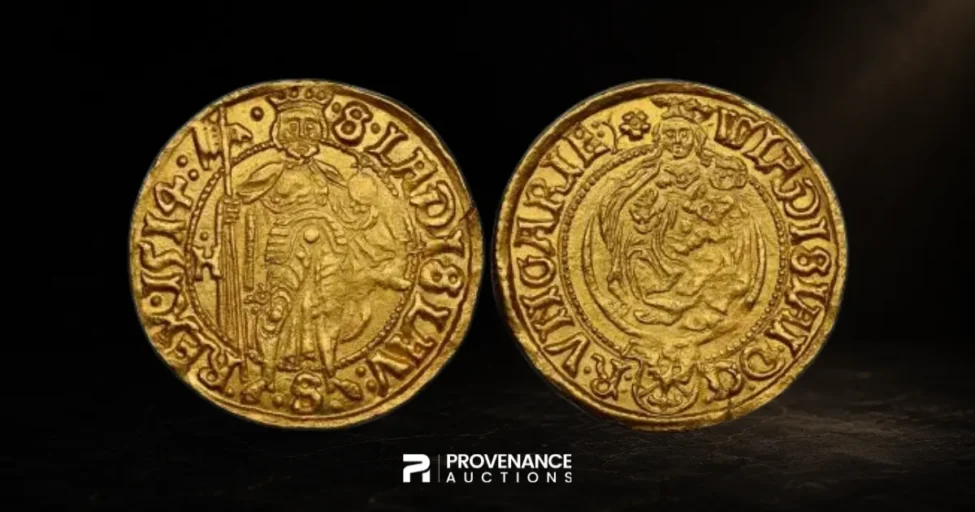
There is a moment almost every collector knows. A coin resting in the palm of your hand, a date, a worn portrait, an unusual coat of arms or a tiny mint mark — and suddenly you are no longer looking at just an old piece of metal. Something shifts. Curiosity, excitement, and a series of questions begin to emerge: where did it come from, who might have used it, what could it be worth, and what story does it carry?
For many people, this is exactly how the world of numismatics begins. Not necessarily with a high-value gold coin or a rare auction piece, but with a personal experience. An inherited coin, a childhood gift, a piece found at a flea market, or an old coin discovered at the back of a family drawer can be enough to set someone on the path of collecting.
The first coin is often more than just a collectible item
Collectors often remember the first coin that made them interested in numismatics. From a professional point of view, it may not be the most valuable piece in the collection. It may not be particularly rare, it may not be in flawless condition, and it may not be a highlighted item in major catalogues. Yet it remains special.
Why?
Because it has emotional value.
A coin can preserve personal stories. It may be connected to a grandparent, a journey, a family memory or an important stage of life. For many collectors, the first piece is not merely an object, but an entry point into a new field of interest. One where history, art, economics, politics and human stories meet in a single small object.
Why can a coin have such a strong effect?
The special appeal of a coin lies in the fact that it is both tangible and mysterious. It can be held, examined and compared with other pieces, yet it still leaves behind many questions.
Who issued it? In which historical period was it made? Which authority, ruler or city stood behind it? What role did it play in the economy? Was it used in circulation, or was it produced as a commemorative issue? How many hands did it pass through before eventually becoming part of a collection?
These questions are part of what makes numismatics so compelling. Collecting is not only about ownership, but also about discovery. Every new piece is a clue that can bring us closer to understanding a period, a culture or a historical event.
Passion often begins with curiosity
Many people do not become collectors by deliberate decision. At first, they simply look into a coin. They check the date, search for the inscription, try to identify the ruler or the issuing country. Then comes the next question. And another. Then the next piece.
Curiosity gradually develops into a system. A person begins to understand that the same type of coin may exist in several varieties. Condition, rarity, mint mark, material, historical background and market demand all begin to matter. In this way, collecting slowly becomes more conscious.
After a while, the question is no longer only whether a coin is “beautiful”, but also what it represents. What place does it have in a collection? How sought-after is it? In what condition has it survived? Does it have a documented origin or provenance? These are the aspects that add a professional perspective to personal interest.
Value does not always begin where we expect it to
The untrained eye often turns first to gold, silver or very old pieces. Of course, material, age and rarity can all be important factors, but the value of a coin is never determined by a single aspect alone.
A more recent piece may also be sought after if it is a rare variety. A modest-looking coin may be significant if it has an interesting historical context. A banknote or coin that appears ordinary at first glance may attract serious collector interest if it has survived in exceptional condition, if it is a minting error, if it belongs to a low-mintage issue, or if it is connected to an important historical period.
This is why professional examination is especially important in numismatics. Recognising true value requires experience, points of comparison and knowledge of the market. Passion may start a collector on the journey, but knowledge helps them make sound decisions.
A collection is built from stories
People outside the field often think of coin collecting as the accumulation of objects. In reality, a good collection is much more than that. It has structure, perspective and a story behind it.
Some collectors specialise in a particular period. Others are drawn to a ruler, a country, a city, a coin type or a historical event. Some buy with an investment mindset, while others choose pieces primarily for their aesthetic or historical value. Neither approach is better or worse than the other — what matters is that the collection has direction and internal logic.
The first coin is often important because it points towards that direction. Someone may become interested in old Hungarian coinage because of a medieval denar. Another collector may discover the ancient world through a Roman coin. A family inheritance may lead someone towards banknotes, while others may be captivated by the artistic design of modern commemorative coins.
Collecting can also be a shared experience
One of the most rewarding aspects of numismatics is that collectors share stories with one another. Behind a coin, there is often a personal discovery, research, a fortunate encounter or the acquisition of a piece that had been sought after for a long time.
This is why the question is so interesting: what was the first coin that sparked your passion for collecting?
The answers may be very different, but they often have something in common. Each one marks a starting point. A memory of the moment when numismatics first became more than just objects. The moment when a coin became a story.
A single coin can be enough to start collector interest
Many collections do not begin with a fully formed concept, but with one interesting piece. A coin that raises questions: where does it come from, in what period was it used, whose hands might it have passed through, and why has this particular example survived?
This is where the attention begins that makes numismatics truly fascinating. Over time, the collector starts looking not only at the date or the material, but also at the details: the mint mark, the condition, the rarity, the historical background and the position the piece holds in the collector market.
For this reason, the first coin is not necessarily the most valuable item in a collection. It is more often the point where curiosity turns into conscious interest. This is one of the key characteristics of numismatics: through a small object, we can examine history, collector demand and the professional background that helps determine real value.
Do you have a coin, banknote or collection at home?
You don’t need to know its value in advance.
Share article
Do you have questions?
We are here to help.
If you have a question regarding an auction or require assistance with any of our services, please contact us. Complete the form and we will respond as soon as possible. We are available to support you at any stage of the bidding process or with any related inquiry.